8 Beginner Crochet Project Ideas and Stitches to Learn
Cozy Home Goods & Kitchen Pieces
Small cotton projects can be a useful place to practise rows and count stitches. Choose materials suited to the intended use and follow the care instructions on the yarn label.
1. A Simple Cotton Dishcloth
Practise single crochet in rows. A finished dishcloth pattern will specify the chain count, dimensions, and yarn quantity.
2. A Moss Stitch Coaster
Explore the alternating single crochet and chain spaces of moss stitch. This is a decorative coaster idea, not a tested heat-protection design.
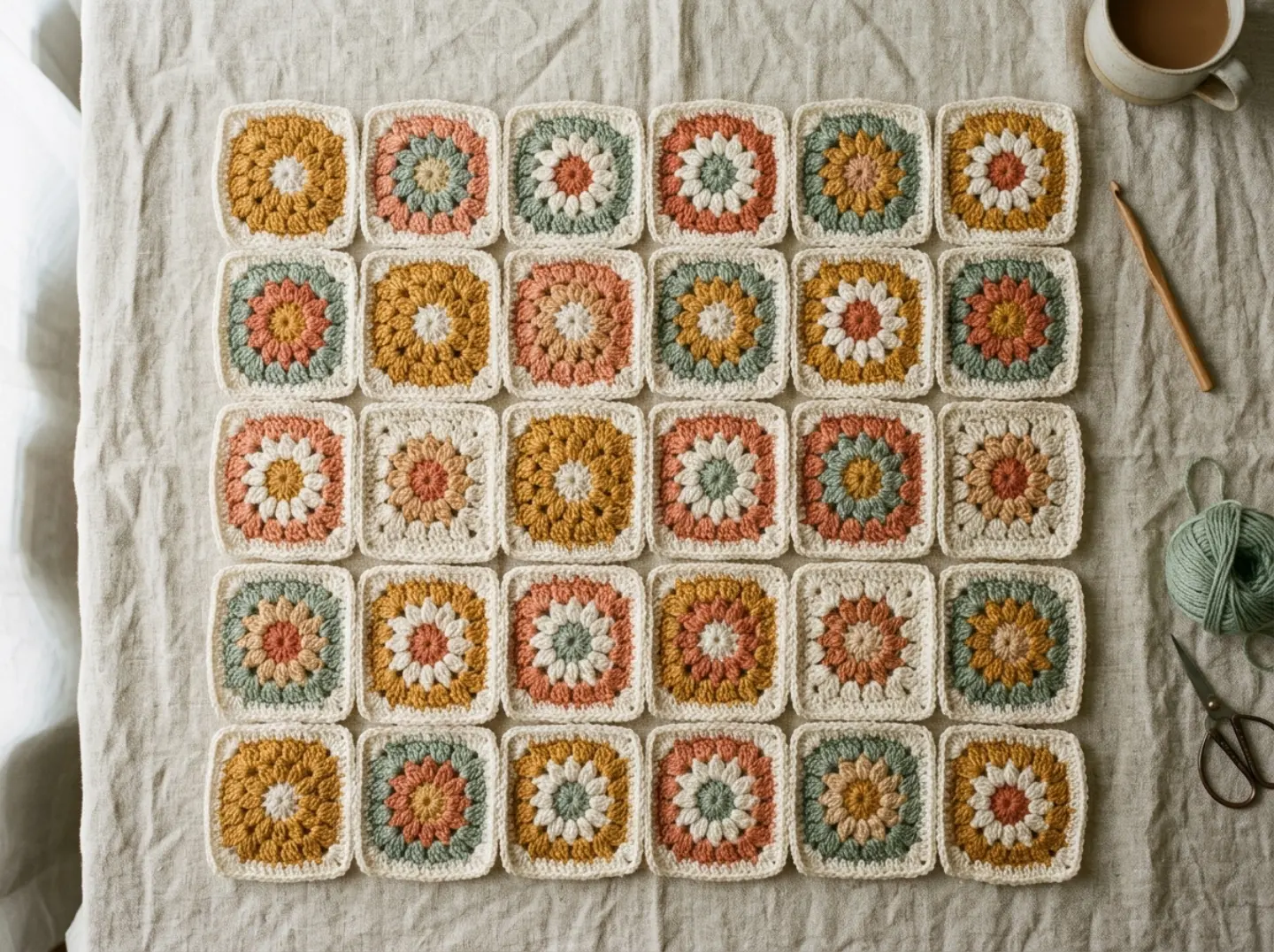
3. A Granny Square Coaster Set
Practise groups of three US double crochets and corner spaces. Follow the granny-square lesson, then use a complete project pattern for sizing and finishing.
Wearable Accessories You Will Wear in Public
A scarf or cowl can begin as a simple rectangle. Finished measurements and gauge still matter, so choose a complete pattern before starting.
4. A Ribbed Cowl
Learn half double crochet before trying a ribbed rectangle joined into a loop. Follow a cowl pattern for the stitch placement, dimensions, and seam.
5. A Moss Stitch Scarf
Use moss stitch to practise a repeated sequence of single crochets and chain spaces. A scarf pattern supplies the width, length, and yarn requirements.
6. A Rectangle Beanie
Some beanies are made from a ribbed rectangle with a gathered top. Choose a complete pattern that explains gauge, fit, gathering, and finishing.
Heirloom Blankets & Throws
A full blanket takes commitment, but using simple modular squares or rhythmic rows prevents boredom. Start with small squares that you can stitch on the train or sofa.
7. A Granny Square Blanket
Build a larger project from repeated squares. Plan the number of motifs, joining method, border, and yarn quantities using a complete blanket pattern.
8. A Half Double Crochet Throw
Practise half double crochet in repeated rows. A throw pattern should specify the dimensions and gauge so you can estimate yarn before starting.
Choose your first project by its construction
A beginner crochet project is easier to manage when it asks you to learn one new skill at a time. A flat rectangle lets you concentrate on finding the first and last stitch. A square worked in rounds adds corners, joins and a different way to count. A shaped toy adds increases, decreases, stuffing and assembly. None of these is forbidden to a beginner, but combining them all in a first project can make a small problem harder to identify.
If you are still learning to recognise stitches, choose a small flat practice piece before a fitted wearable. If you can keep a consistent row count, a scarf or a set of squares can give you repetition without new shaping on every row. If making a toy is what motivates you, practise its ring and shaping on spare yarn first, then begin the actual pattern. Choose a project you want to finish, with instructions that explain the techniques it expects.
Read a complete pattern before buying yarn
Check the finished measurements, yarn weight, total length required, hook size, stitch abbreviations and finishing instructions. Look for an explanation of whether turning chains count as stitches. A photograph is useful inspiration, but it cannot tell you the starting chain or the number of rows. The lessons linked above teach stitches; they do not supply all the instructions for these eight finished projects.
For a wearable, check whether measurements describe the body or the finished fabric. For a blanket, decide whether you want the stated size before changing the starting chain: a stitch repeat or border may require a particular multiple. For squares, check how joining affects the final dimensions. If a pattern omits information you need, resolve that uncertainty before buying a large quantity of yarn.
Make the first few rows a checkpoint
After your first row, stop and count. Mark the edge stitches, compare the fabric with the written instructions and work a few more rows before deciding that your tension is consistent. Set the piece down flat rather than stretching it to look square. A small uneven sample is useful information: it shows what to practise while restarting is still easy.
Keep the yarn label and write down your hook size. When you put the work away, note the last completed row and leave a marker in the working loop so it cannot easily unravel. This simple habit makes a project easier to return to, especially when learning in short sessions. Finish and weave in ends according to the pattern before deciding how the fabric feels in use.
What should you make after the first project?
Repeat one familiar construction with a deliberate change: a different stitch, a new colour arrangement or a more careful finish. A second small rectangle can teach you more than abandoning a much larger project halfway through. Move to a fitted project when you are comfortable measuring a swatch, or to a motif project when you can follow a repeat and count corners.
You do not need to buy every hook size at once. Start with the materials for the project you chose, then let later patterns guide new purchases. The most useful next lesson is the one that solves a specific difficulty in the work already on your hook.
A note to take with you
Pick one construction, read the complete pattern, and practise its unfamiliar stitch before starting. A small finished piece is a useful foundation for the next project.